

The Greatest Threat to Long-Term Success Is Often Short-Term Success
A few days ago, I was speaking with a senior leader from an organization that’s been around for over a hundred years.
Today, they’re thriving.
Strong performance. Strong market position. Strong leadership.
From the outside, most people would look at them and think:
Why change anything?
But during our conversation, one of their leaders shared a story I haven’t been able to stop thinking about.
Years ago, their business faced what he described as a near-death experience.
Revenue was under pressure. Performance was slipping. There were serious conversations about whether their division would even survive.
It was a live-or-die moment.
And because of that…
They changed.
They challenged assumptions.
They retooled processes.
They aligned around a new vision.
And over time, they came back stronger than ever.
Today, they’re not fighting for survival.
They’re fighting something far more subtle.
And in many ways…
Far more dangerous.
They’re fighting success inertia.
Why Successful Organizations Often Resist Change
Here’s what I’ve learned working with leaders across healthcare, manufacturing, technology, government, and fast-growing organizations:
When something is broken…
Change feels obvious.
When performance drops, customers leave, culture slips, or market share declines—urgency is built in.
Pain creates movement.
But when things are working?
When revenue is strong…
When teams are hitting goals…
When the stock price is climbing…
When customers are happy…
That’s when change becomes harder.
Because now change feels optional.
And that’s where even great organizations can quietly get stuck.
Not because they lack intelligence.
Not because they lack talent.
But because success has a way of creating comfort.
And comfort has a way of protecting the very systems that may eventually limit growth.
The Two Types of Change
Over the last few years, I’ve started framing this through a distinction I call:
Forced Endings
These are the endings life chooses for us.
A market disruption.
A merger.
A health scare.
A leadership change.
A loss.
A crisis.
Forced endings create urgency because pain leaves little room for denial.
Most organizations eventually respond here.
Chosen Endings
These are different.
These happen when leaders choose to evolve before survival demands it.
Ending:
- outdated processes
- unproductive meetings
- legacy thinking
- toxic cultural norms
- leadership habits that once worked—but no longer fit the future
Chosen endings don’t happen because of pain.
They happen because of vision.
And that’s harder.
Because there’s no burning platform.
No crisis.
No collapse.
No immediate pressure.
Only the quiet realization that:
What got us here… may not get us where we’re going next.
The Leadership Challenge Nobody Talks About
One leader told me:
“In some ways, this transformation feels even bigger than the one we faced back then.”
Not because the business is failing.
Because the business is succeeding.
And when things are going well, urgency has to be manufactured.
That’s why I often say:
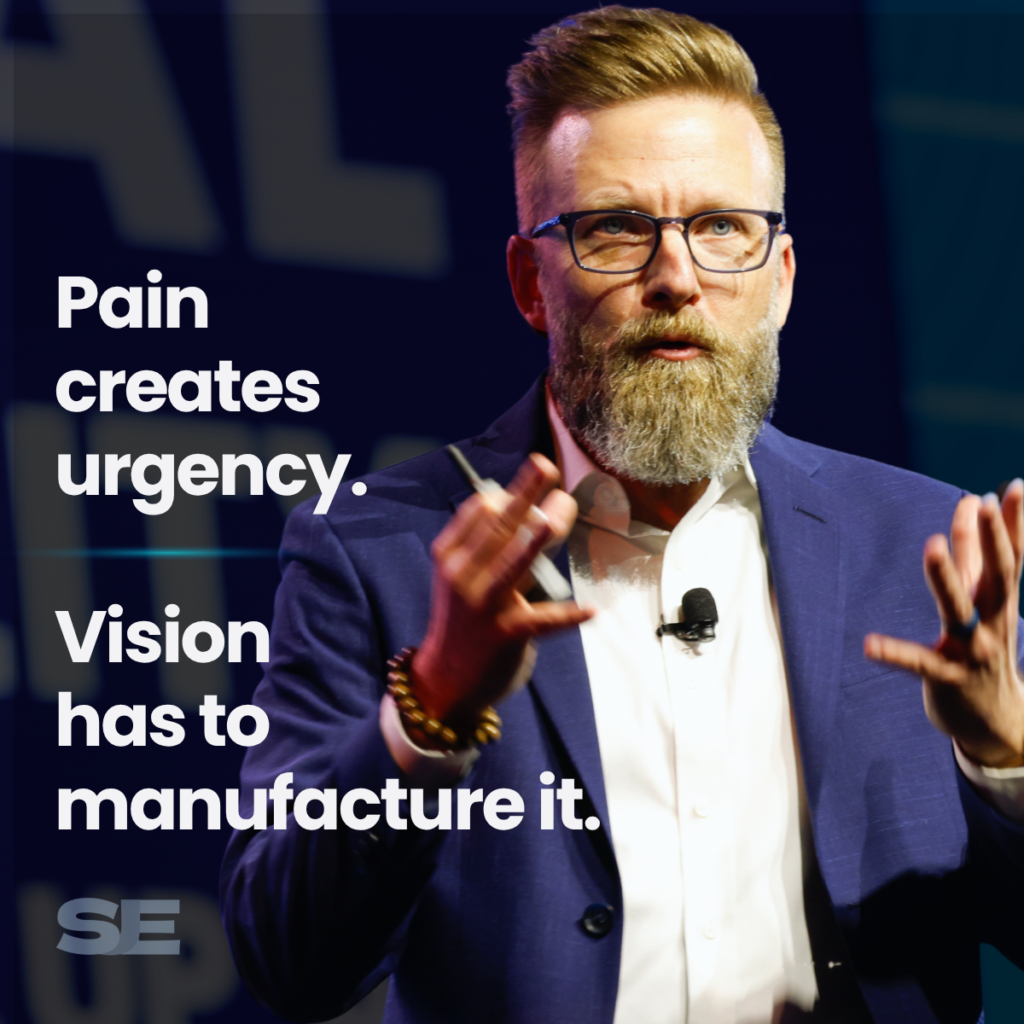
Pain creates urgency. Vision has to manufacture it.
That’s leadership.
Not waiting until change becomes unavoidable.
Not reacting when the market forces your hand.
But creating movement while you still have:
- the talent
- the resources
- the momentum
- and the strength to do it well
Three Questions Every Executive Should Ask Right Now
If your business is performing well, ask yourself:
1. What are we doing today simply because it worked in the past?
Success can create blind spots.
2. Where are we confusing stability with relevance?
Just because something works now doesn’t mean it will work next year.
3. What would we change if we weren’t afraid of disrupting our own success?
That question often changes the room.
Radical Adaptability Means Choosing Your Ending Before Life Chooses It For You
The leaders, teams, and organizations that thrive long-term aren’t the ones who wait for pain.
They’re the ones willing to evolve while they still have the strength to do it.
That’s what I call Radical Adaptability.
And in a world moving faster than ever…
Default is not destiny.
You have to choose your ending.
Final Reflection
So I’ll leave you with the same question I often ask leaders from the stage:
What’s one thing in your organization that isn’t broken… but may not be built for where you’re going next?
That question may be uncomfortable.
Good.
Growth usually starts there.
If your leadership team is navigating growth, transformation, merger integration, cultural change, or strategic reinvention, this is exactly what we explore in my Radical Adaptability keynote.
Because the goal isn’t just surviving change.
It’s becoming stronger because of it.