
Fear Is Not a Stop Sign
It’s the signal you’ve been waiting for.
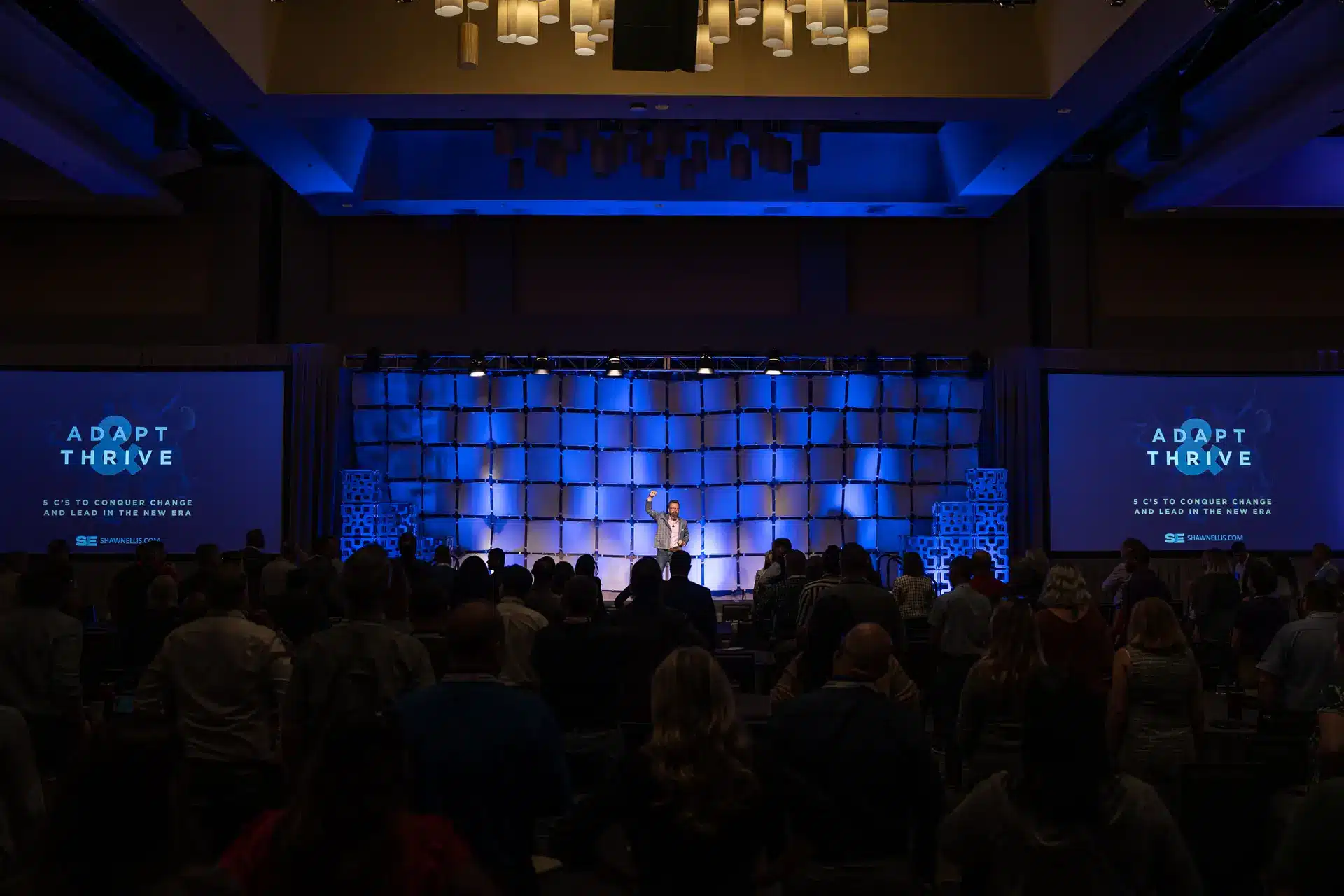
I’ve asked thousands of people a version of this question from the stage:
What’s holding you back?
Time comes up. Resources come up. The right moment comes up.
But when we get honest—really honest—almost every answer eventually leads to the same place.
Fear.
Not because people are weak. Not because they don’t want to change. Most people genuinely do. They leave conferences energized. They make commitments. They mean every word.
And then they go home. And fear shows up. And familiar wins again.
Here’s what I’ve learned: that’s not a character flaw. That’s neuroscience.
Your Brain Is Doing Its Job
Your brain has one primary question it’s always asking: Are we safe?
When the answer is yes, you can think clearly, decide confidently, lead well. But the moment something feels uncertain—a new role, a difficult conversation, a change you didn’t choose—your brain registers that as a potential threat. And it pulls you back to familiar. Same habits. Same patterns. Same routines—even the ones that aren’t working.
That’s not weakness. That’s your survival wiring doing exactly what it was built to do.
Endings mean change. Change means uncertainty. Uncertainty triggers fear. And fear sends us straight into what I call the Comfort Loop—the pull back to familiar, even when familiar is the problem.
This is why you postpone the hard conversation. Why you stay in the role that’s stopped challenging you. Why you leave an event fired up and fall back into old habits within 72 hours.
You’re not broken. You’re just defaulting.
Default is not destiny.
The Mistake We Make With Fear
We treat fear like a warning sign. Like an obstacle. Like evidence that we’re moving in the wrong direction.
But what if we’ve had it backwards?
Fear is not the sign you’re doing something wrong. Fear is the sign you’re doing something big.
Think about the last time you felt genuine fear around a decision. Not danger— not a threat to your physical safety—but that specific kind of dread that comes before a difficult conversation, a bold move, a choice that could change things.
That feeling isn’t evidence of the wrong path. In most cases, it’s evidence that you’re standing at the edge of something real.
Masters of Radical Adaptability don’t feel less fear than the rest of us. They’ve just learned to read it differently.
Courage Is the Choice
In the Radical Adaptability framework, Courage is the third of five choices—and its specific job is to help you end the Comfort Loop.
Notice I said choice, not trait. Courage isn’t something you either have or don’t have. It’s something you choose, in the moment, with the right tool.
The tool for Courage is a simple question: Would you rather?
Would you rather stay comfortable—or step into the discomfort where growth actually lives?
Would you rather live with the possibility of failure—or the certainty of regret?
Those aren’t rhetorical questions. They’re decisions. And every time you answer them honestly, you’re building the capacity to act in spite of fear, not in the absence of it.
That’s Radical Adaptability. That’s Courage.
The Brave Choice
At the end of a lot of my sessions, I ask people to write down one ending — one brave choice they’ve been avoiding.
Not someday. Now.
Not after the conditions are right. Now.
Because here’s the thing about fear: it doesn’t go away when the conditions improve. It goes away when you decide.
What’s one decision you’ve been delaying because it feels uncomfortable?
That discomfort is the signal. The question is what you do with it.
Shawn Ellis is a keynote speaker and author who teaches leaders and teams how to navigate change through the Radical Adaptability framework. Contact us today to talk about bringing this message to your organization.