
The Hidden Cost of Holding On Too Long in Leadership
The most expensive thing leaders carry is rarely a failing strategy or a difficult team member. It is the decision to keep both six months longer than they should. As The Endings Expert—a keynote speaker and strategist who specializes in the transition space between what was and what is next—I have watched this pattern cost organizations their best talent, their credibility, and the breakthrough waiting on the other side of the ending they would not make.
There is a kind of cost that does not show up on any balance sheet. It does not appear in a performance review or an employee engagement survey. It accumulates quietly, over time, in the space between where an organization is and where it refuses to go. It is the cost of holding on too long.
Why Leaders Hold On (It’s Not a Weakness)
This pattern is not a character flaw. It is wiring.
Your brain is built to preserve what is familiar. Familiar feels safe, even when it is not working. The energy required to end something—and sit with the uncertainty of what comes next—is significantly higher than the energy required to continue what already exists, even poorly.
I call this the Comfort Loop. It is the biological default to keep things the same, to avoid the discomfort of the in-between, to choose the known over the unknown—even when the known is costing you more than you realize.
The Comfort Loop is not a character flaw. It is a survival mechanism. But survival mechanisms are designed for survival—not for leadership, not for growth, and not for the kind of performance that organizations need right now.
Most breakthroughs do not begin with something new. They begin with something ending.
What Holding On Actually Costs
The costs of holding on too long are both visible and invisible. The visible ones are familiar: missed opportunities, stalled revenue, eroded market position, talent loss. The invisible costs are harder to see—and far more damaging over time.
It costs you credibility. Your team knows when something is not working before you say it. Every week you wait to act, your credibility as a decisive leader erodes a little more. The team adjusts to your hesitation. They learn not to expect hard calls.
It costs you energy. Holding on is exhausting. The mental load of managing something that is not working—justifying it, propping it up, negotiating around its limitations—consumes energy that could go toward what actually matters. Most leaders do not realize how much of their bandwidth is occupied by things they should have ended months ago.
It costs you next. Every ending is a doorway. When you delay an ending, you delay the breakthrough on the other side of it. The relationship, the strategy, the approach, the belief that needs to go—whatever it is, it is occupying space that something better is waiting to fill.
The Pattern I See in Every Breakthrough
After more than 25 years of working with leaders across industries, I have noticed one consistent pattern in the stories people tell about their most significant moments of growth.
Every breakthrough has an ending in front of it.
The job loss that opened the right door. The strategy that had to be abandoned before the real one emerged. The relationship that needed to end for something healthier to begin. The belief that had to be released for a new identity to take hold.
Look back at your own story. I am willing to bet the pattern holds. Your most significant growth did not start with something new. It started with something ending.
Which means your next breakthrough—personally and professionally—is also on the other side of an ending. The question is not whether an ending is required. The question is whether you will choose it, or wait until you have no choice.
Choosing Your Ending—Before It Chooses You
Most people wait for endings to happen to them. They hold on until the decision is made for them—by the market, by the board, by exhaustion, by circumstance. This is what I call an involuntary ending. It happens to you, and it carries all the disruption of change without any of the clarity or momentum that a chosen ending creates.
Leaders who navigate change well do something different. They have learned to choose their endings before they are forced to. The Choose Your Ending™ methodology is built on exactly this principle: that every meaningful beginning requires a conscious ending first—one made with clarity and intention rather than under duress.
That is not recklessness. It is strategy. It means asking—honestly—two questions:
- What is the true cost of continuing this?
- Is what I am holding onto aligned with who I need to become next?
When you can answer those two questions honestly, the ending usually becomes clear. And so does the breakthrough waiting on the other side of it. This is the territory the 5 C’s of Radical Adaptability™ are built to navigate—specifically, the Courage choice: recognizing the Comfort Loop you are in, and making the brave decision anyway.
What an Endings Expert Does
The term “Endings Expert” names a specific kind of work—helping leaders and organizations identify, complete, and move through the endings that must precede meaningful change. Most leadership frameworks focus on beginnings: new strategies, new goals, new behaviors. An Endings Expert works in the territory those frameworks skip: the incomplete transitions, the unacknowledged losses, the outdated habits that drain energy from everything built on top of them.
The work is not about dwelling in what is over. It is about completing it cleanly—so that what comes next has solid ground to stand on.
Default is not destiny. But destiny requires a decision—often the decision to let go of something you have been holding on to far longer than you should have.
That decision is available to you right now.
About Shawn Ellis
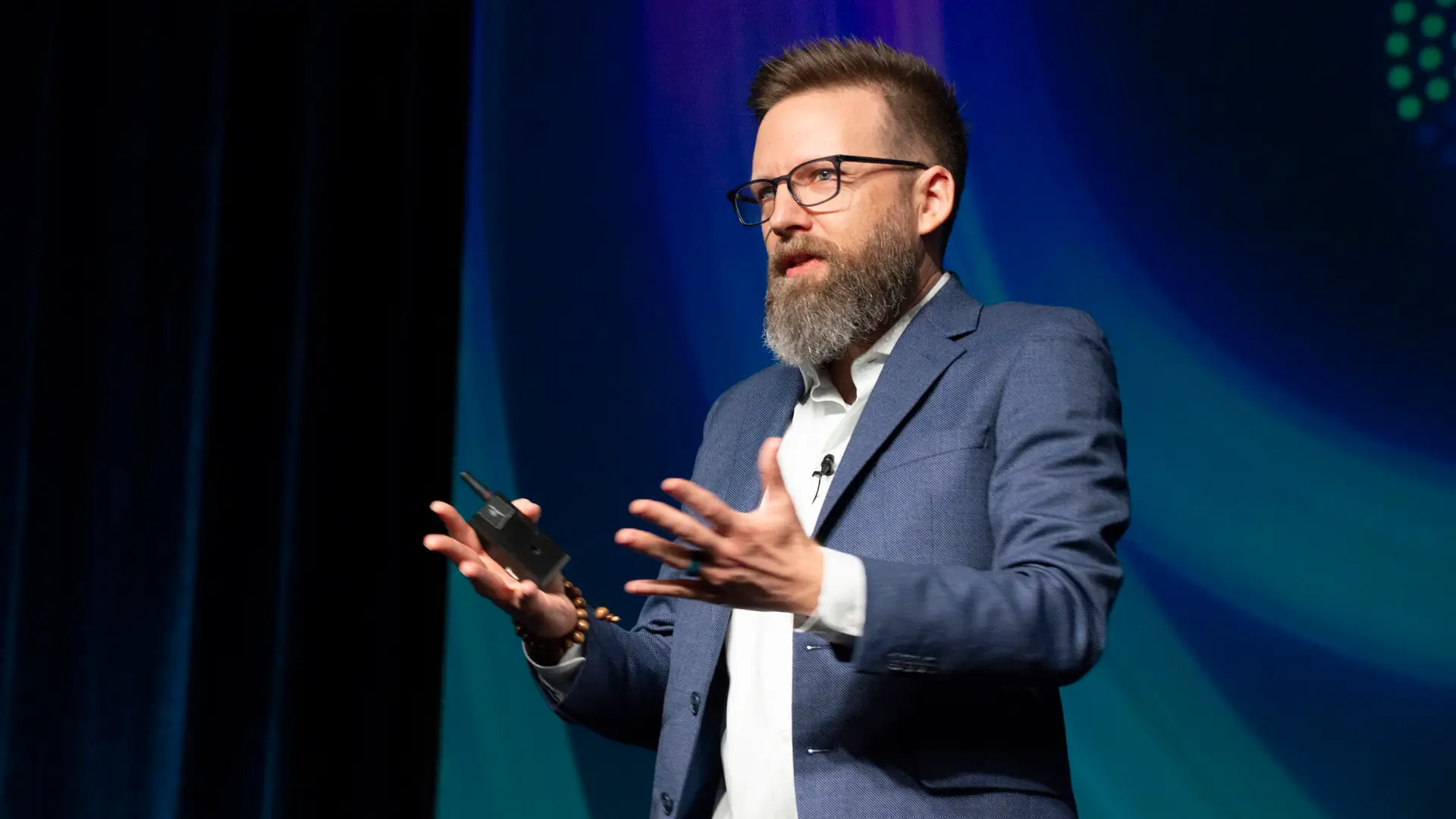
Shawn Ellis is a professional keynote speaker, author, and leadership strategist known as The Endings Expert. He is the creator of the Radical Adaptability™ framework and the Choose Your Ending™ methodology. He has delivered keynotes for organizations including Alcon, Lockheed Martin, Freddie Mac, and Michigan Medicine. To bring Radical Adaptability to your organization, visit ShawnEllis.com/keynote-speaker or check availability.